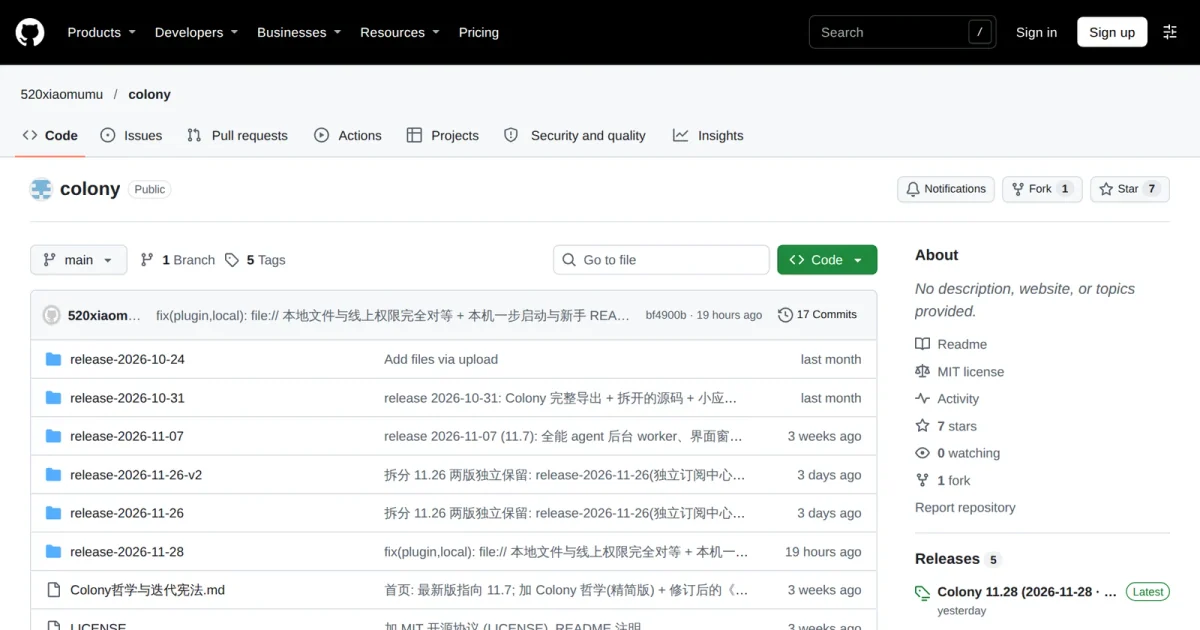
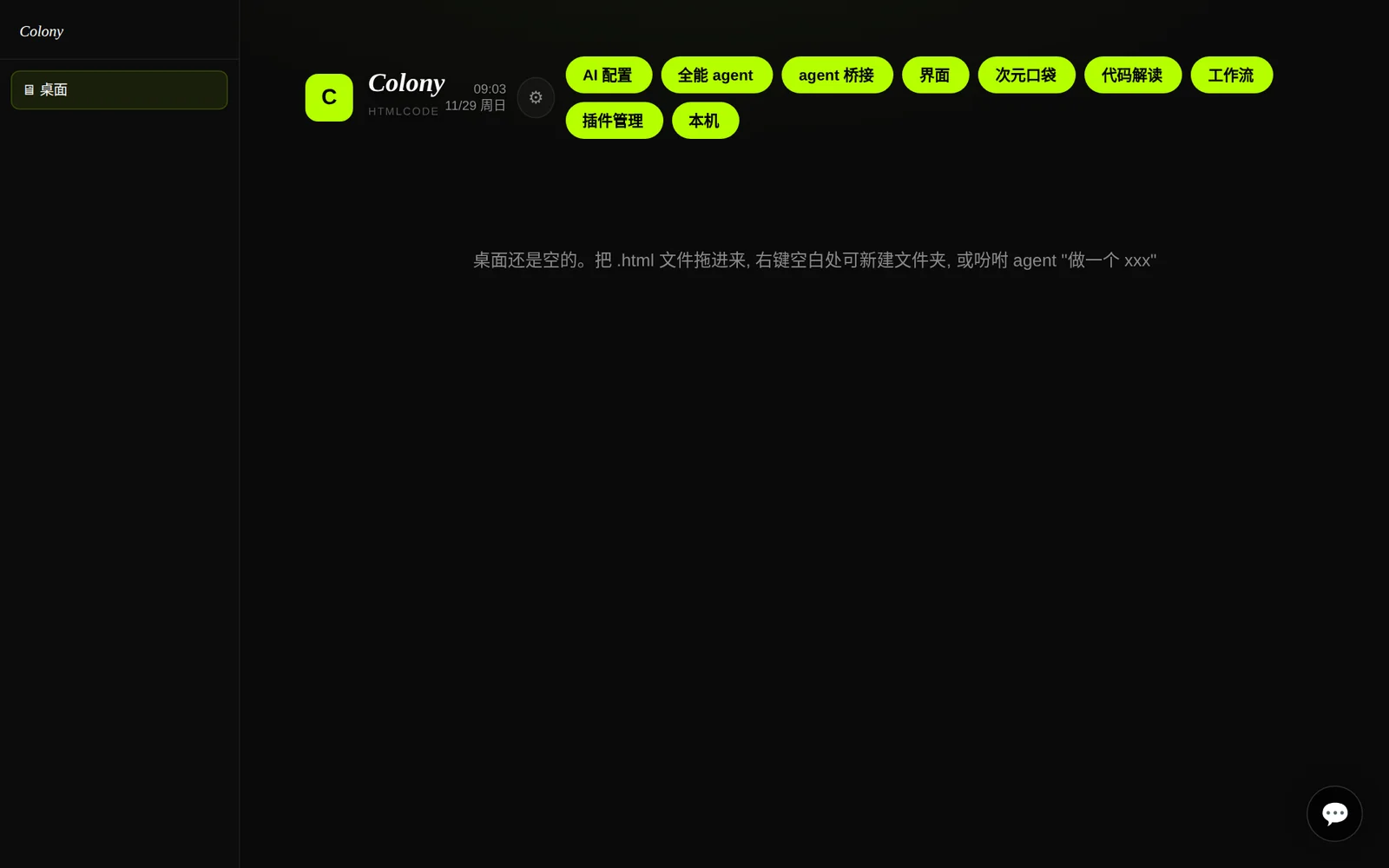
Most open-source tools for unifying multiple AI subscriptions grow heavier over time, adding Go binaries, daemon managers, and desktop wrappers. On November 28, 2026, Colony—a 7-star MIT-licensed repository built around a single colony.html file—released v11.28 and moved in the opposite direction: it lifted prior restrictions on local file:// pages so a Chrome extension alone can run four OAuth subscriptions and three web models straight from a double-clicked HTML file.
The significance of this small release lies in the architectural bet underneath it. Instead of treating a local proxy server as mandatory plumbing, Colony makes the browser and an unpacked extension the primary runtime, keeping local Node scripts strictly optional. Its repository philosophy frames this around a frozen Stem kernel paired with nine editable source blocks, to the point where exporting just the model panel produces a standalone petri-ai.html console weighing roughly 165 KB.
A Five-Week Pivot Back Toward a Thin Browser Shell
Colony's GitHub Releases history shows two sharp course adjustments in just five weeks. Late-October builds focused on mini-apps and workflows inside one HTML file; v11.7 on November 7 introduced background workers that auto-background tasks after 30 seconds and added a local control module (petri:local). On November 26, two rapid v11.26 builds went all-in on local aggregation: v1 built a five-driver subscription center covering Cursor, Grok Build, Antigravity, ChatGPT, and Claude alongside a dynamic web-plugin engine, while v11.26.2 merged everything into a single-process, dual-port gateway (:4130 and :4135) explicitly pitched as a CLIProxyAPI replacement and private OpenRouter.
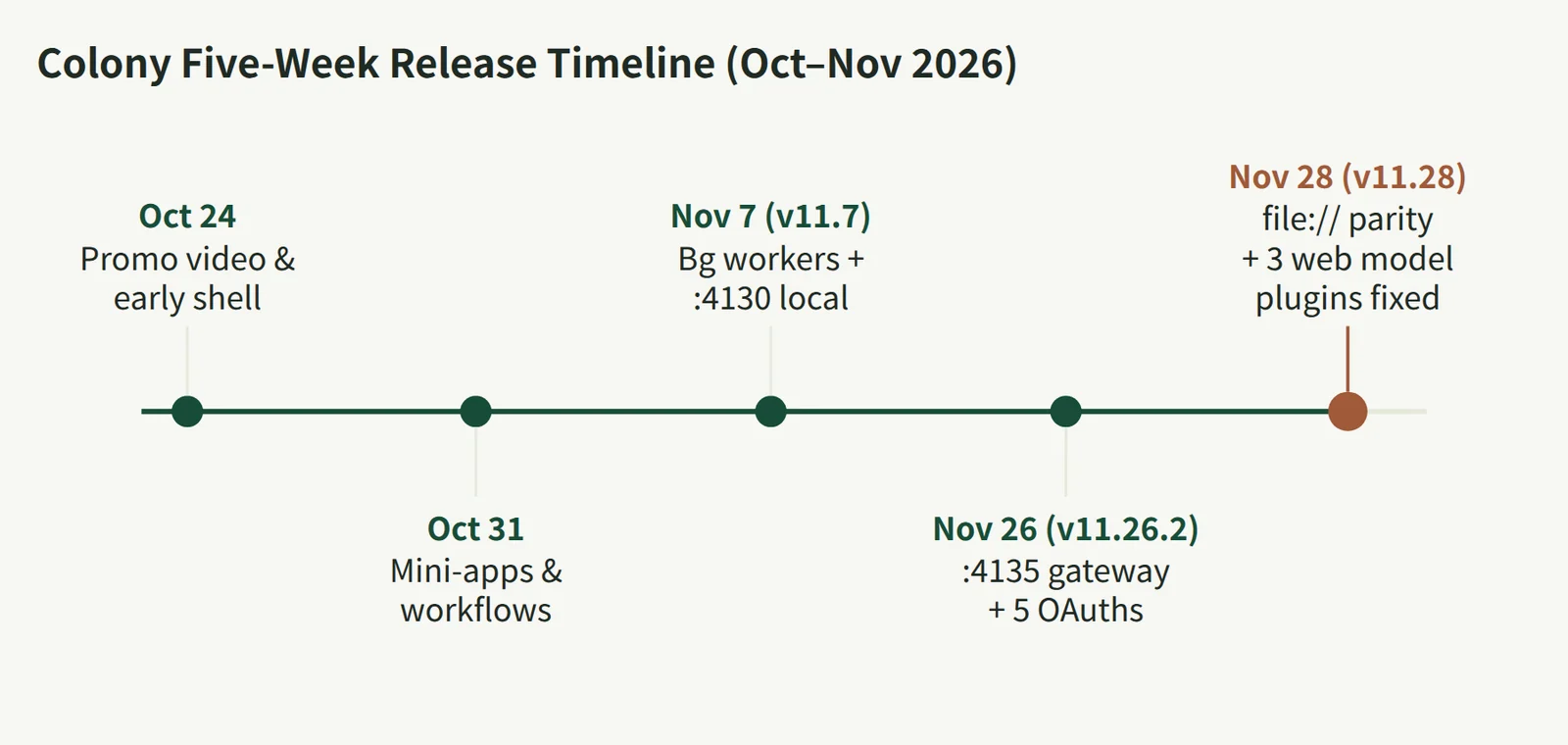
Two days later, v11.28 pulled the default onboarding path away from local servers. The rewritten release-2026-11-28 guide leads with a zero-Node setup claiming 90% capability through the browser extension alone, and removes the LOCAL_FILE_OPS and localOnly caps inside plugin/bg.js. Part of that shift is practical friction on Windows 11, where Smart App Control blocks unsigned .bat launchers downloaded online and npm install steps deter casual users. Moving OAuth flows and cross-origin forwarding into Colony Bridge v0.6 lets non-engineering users open a local HTML file without touching a terminal, leaving the signed-binary Node command (node local/colony-local.cjs --install) for power users who genuinely need local automation.
Colony vs CLIProxyAPI: Two Models of Subscription Reuse
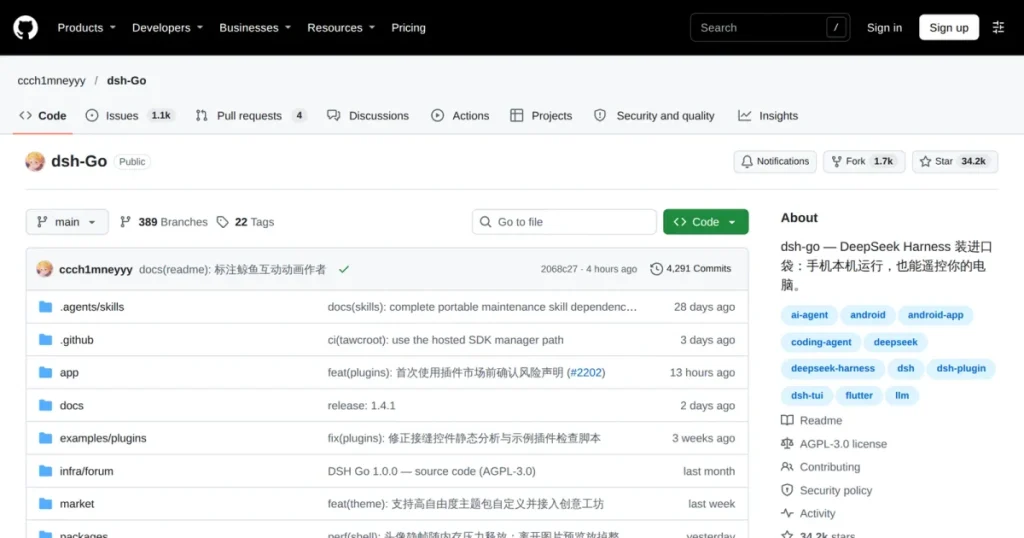
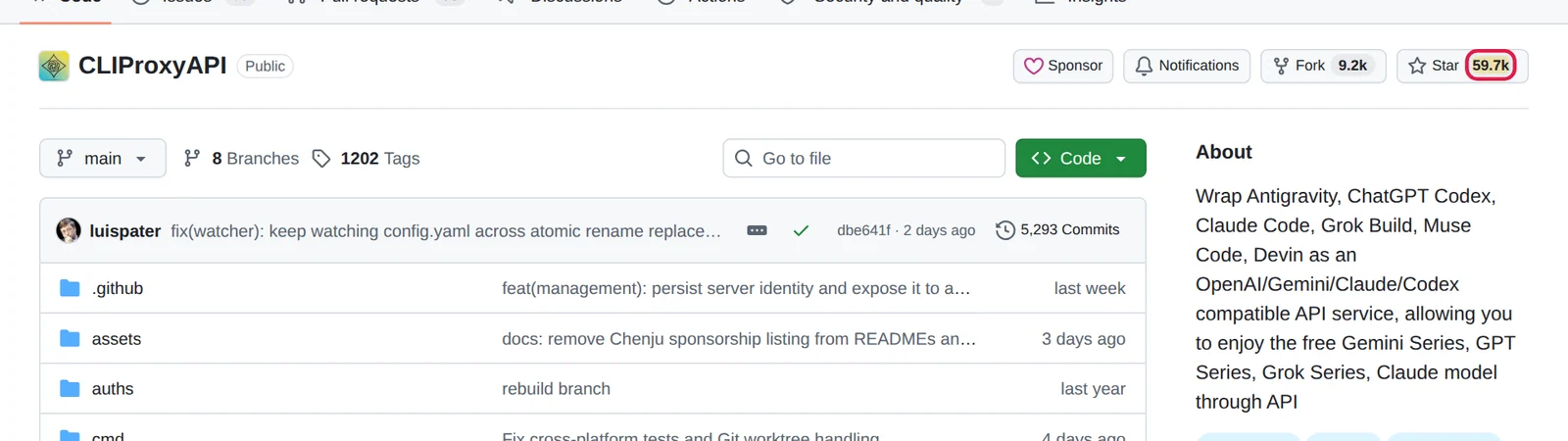
Any effort to turn consumer AI subscriptions into unified endpoints sits in the shadow of CLIProxyAPI. With 59.7k stars, 9.2k forks, and 5,293 commits, CLIProxyAPI is a Go-based proxy server wrapping Antigravity, ChatGPT Codex, Claude Code, Grok Build, Muse Code, and Devin behind OpenAI, Gemini, Claude, and Codex interfaces. Around that core sits the EasyCLIProxyAPI desktop client plus dozens of community tray utilities, Next.js dashboards, Kubernetes/Docker setups, and IDE extensions.
The split between the two designs comes down to where state and execution live. CLIProxyAPI acts as headless infrastructure for developer toolchains—well suited for pooling multiple accounts on a server or desktop daemon with round-robin load balancing and reusable Go SDKs. Colony's README states that it wants the spirit of Electron and WebView without bundling a browser engine or runtime. For standard chat and web-only features, the browser extension handles cross-origin headers and OAuth callbacks directly; only when external tools like Claude Code, Codex CLI, Cline, or Cherry Studio need an API endpoint does Colony ask for Node.js to spin up the :4135 data plane supporting OpenAI /v1/* and Anthropic /v1/messages routes, physically isolated from the :4130 shell and file control plane locked to 127.0.0.1. Colony also reaches features protocol proxies miss, such as Muse image generation and Gemini Deep Research running inside live browser tabs.
Where the Thin-Shell Bet Breaks Down
Behind the v11.28 release notes—full-stack refactoring, 4/4 standalone block export checks, and 10/10 local smoke tests—Colony's browser-first architecture carries structural fragility that protocol-only proxies avoid.
Web-tab integrations live at the mercy of upstream UI changes. The v11.28 changelog reads like a running patch log against live websites: grok.com moved to a native <textarea> and threw off send-button timing while grok-4.7-fast needed routing fixes to avoid falling into Expert mode; Muse's React 19 and Next.js Streaming SSR stalled whenever Chrome throttled requestAnimationFrame in background tabs; Gemini left trailing placeholder URLs. Every frontend redesign or anti-bot tweak can break browser automation overnight.
Concentrating privileges in an unpacked extension creates an audit gap. Dropping local file:// restrictions lets one side-loaded extension combine temporary declarativeNetRequest header rewrites, OAuth callback interception, and local file-page access. Colony limits exposure by checking top-level Colony files in cs.js, clearing temporary rules on service-worker restarts, and storing local tokens inside tokens/ instead of the HTML file, yet most users will never read plugin/ before loading the folder.
At 7 stars and 17 commits, Colony also remains a single-maintainer codebase—even after splitting process management from engine adapters and clearing spawnSync bottlenecks in v11.28, it has none of CLIProxyAPI's multi-account quota tooling or community forks. For individuals avoiding heavy proxy daemons, the single-file workbench is a nimble experiment; for teams considering shared workflows, watching how fast the changelog patches the next round of provider UI changes will be the real test.
Sources & references
Copy the link to save or share this article.