When a new model arrives, I first look at the work it is meant to take on. After reading the Gemini 4 Argon announcement, one picture stayed with me: a task reaches step ten, the requirements from the first nine steps still matter, someone checks the mistakes, and the final deliverable can be accepted.
This is an editorial view based on public information. As of October 4, 2026, I have not received Argon access or run it on my own projects. What follows is what interests me, what I question, and how I would test it.
The part that interests me is a task with an ending
I would like to give AI a difficult piece of work: fix a problem in an old system, reconcile contradictory documents, or update an existing website with sources. Starting is usually manageable. The hard part comes when something changes halfway through and the original delivery requirements still need to survive.
Google positions Argon for long workflows across software engineering, enterprise knowledge work and cyber defense. That emphasis appears on its model page. It is also where my interest lies: how often would I need to take over and steer the task again?
For a code fix, I would want a description of the change, results from checks that actually ran, and the boundaries still unresolved. For a content update, I would want sources, verification dates and uncertainty preserved. A concrete deliverable makes it harder to end a task with polished reassurance.
A million output tokens makes me think about the brakes
The announcementraises the output-token limit to one million. This is an output allowance; it should not be treated as an input-context specification or a promise that every response will become a book.
I see the value in giving difficult work more room for attempts and checks. I do not want every small question to consume that room. Greater capacity makes stopping judgment more valuable: once the goal is met and the evidence is sufficient, hand over the result.
A useful colleague knows when to think again and when to finish. I would allow complex tasks enough room while keeping the final deliverable short and specific. Capacity and a concise working style can coexist.
I would translate token prices into the cost of one finished job
A tariff is only the beginning of a bill. Artificial Analysis’s independent evaluationreports lengthy output in its workload and points out that task costs change after the launch discount. Those are evaluation-specific results, rather than a ready-made budget for our projects.
I would keep four records: model spend, waiting time, human revision rounds and whether the result was accepted. A cheaper request that leaves me with half an hour of repairs may be a poor bargain. Extra reasoning spend that removes two rounds of rework could be worthwhile.
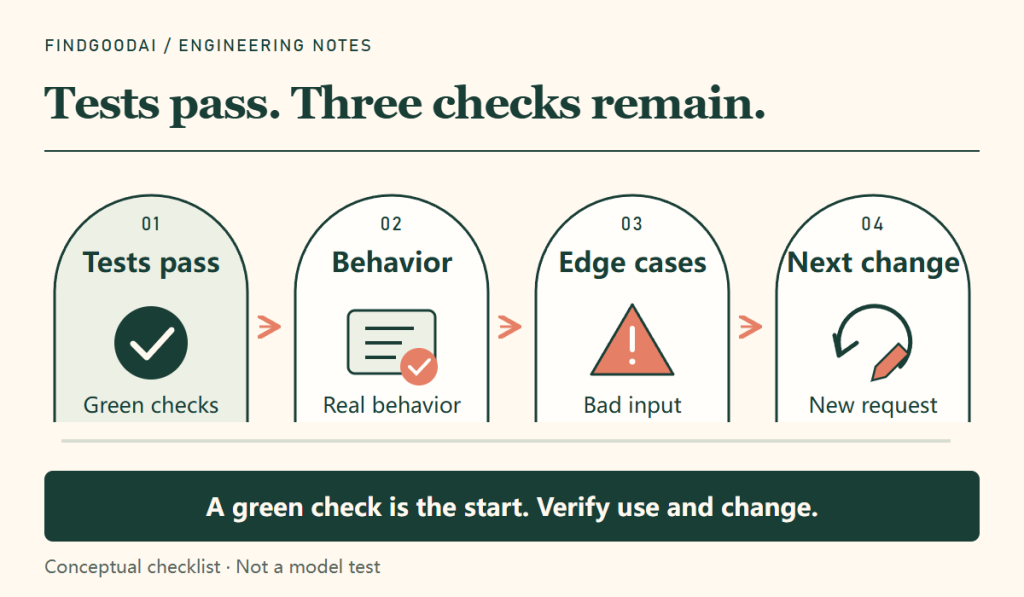
For a useful comparison, I would give each model the same materials, acceptance criteria and budget cap. Success would mean something checkable: page facts agree with their sources, relevant code checks pass, and citations support the conclusions. Cost becomes meaningful when attached to accepted work.
Scores are clues; I also want to see how it handles failure
Google reports 77.9% on DeepSWE v1.1 and 57.4% on Terminal-Bench 4.0. Its evaluation methodologydescribes reasoning settings and task-specific setups. These are useful results, but two scores cannot establish reliability across every kind of work.
I care about what happens when documents conflict, checks fail or a fact remains uncertain. Does the model ask, report the failed check, and leave the unknown unresolved? Clear failure tells me how to continue. Failure presented as success makes every later check more expensive.
Once I can access Argon, I would begin with three small tasks: a reversible code fix, a research summary whose claims can be checked one by one, and a website update with a precise scope. I would look for consistent completion on ordinary work before expanding its responsibilities.
For now, expectations belong beside a clear access status
Argon currently reaches approved trusted defenders through the Fairwind Program. Broader access awaits further announcements. A model announcement, availability to a particular account and a published API identifier each require their own verification.
What I hope to see is simple: when I close the workspace at night, that difficult job has an ending I can inspect. A new model can make me curious enough to try it. Consistently finished work would make me want to keep it.
See the Gemini 4 Argon model recordfor specifications, prices and access status, or read our earlier benchmark analysis. Cover artwork is from Google’s official announcement.
Sources & references
Google · Gemini 4 Argon announcement ↗
Google DeepMind · capabilities and benchmark results ↗
Google DeepMind · evaluation methodology ↗
Copy the link to save or share this article.