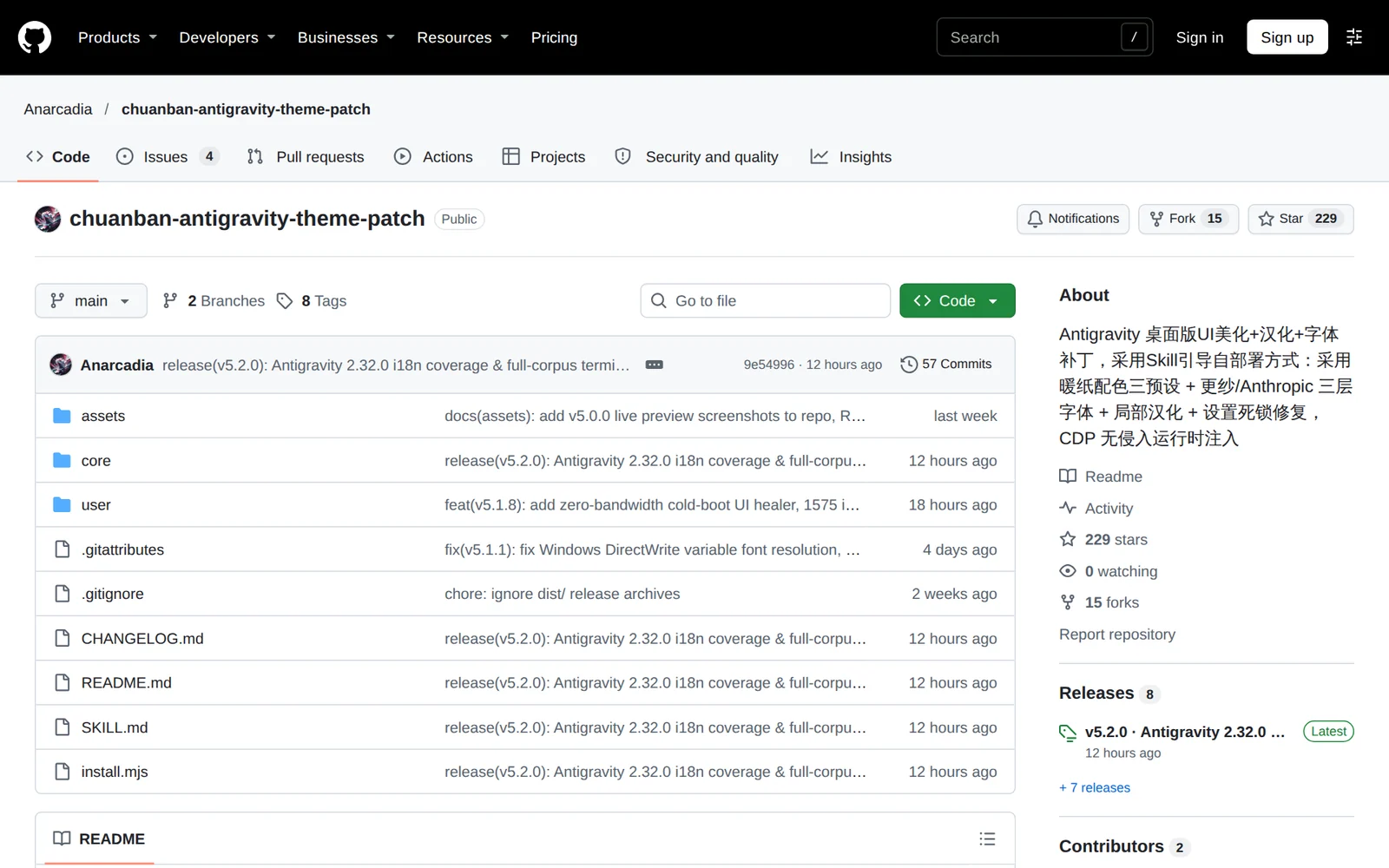
Google shipped the Antigravity 2.32.0 desktop client on November 13, 2026, and less than a day later the community mod Anarcadia/chuanban-antigravity-theme-patch landed v5.2.0 on November 14, expanding its Chinese UI dictionary to 1,630 entries. With 229 stars, 15 forks, and 57 commits, the repository illustrates three broader shifts around desktop AI clients: frequent app releases are pushing mods out of app.asar bundles, installation instructions are increasingly packaged as SKILL.md contracts for coding agents, and official updates are quickly absorbing the visual fixes third-party tools pioneered.
Rapid client releases are pushing mods out of app.asar
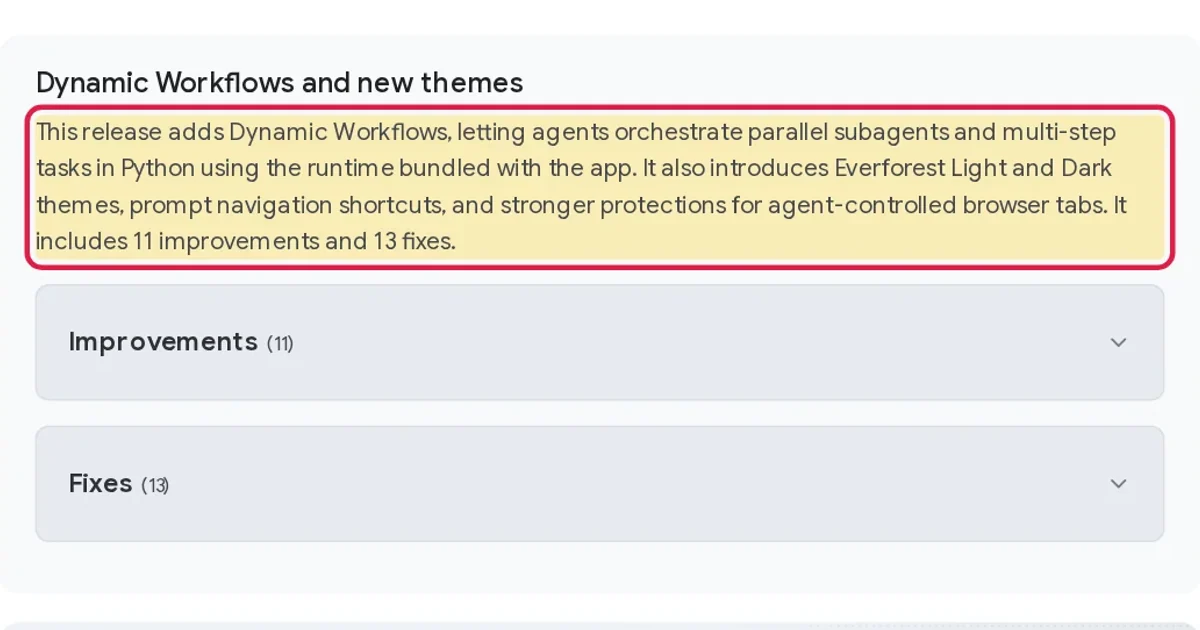
The official Google Antigravity changelog shows just how fast the desktop binary moves: v2.29.0 arrived on November 3 with voice mode, remote agents, and the Onyx default theme; v2.30.0 and v2.31.0 followed on November 9, overhauling the Knowledge Work layout, rounded cards, chat bubbles, /swarm, 12–16 pixel font sizes, and split-view plugins; v2.31.1 and v2.31.2 landed on November 11; and v2.32.0 arrived on November 13 with 11 improvements and 13 fixes. By default, Antigravity auto-updates unless a user manually locks the update setting.
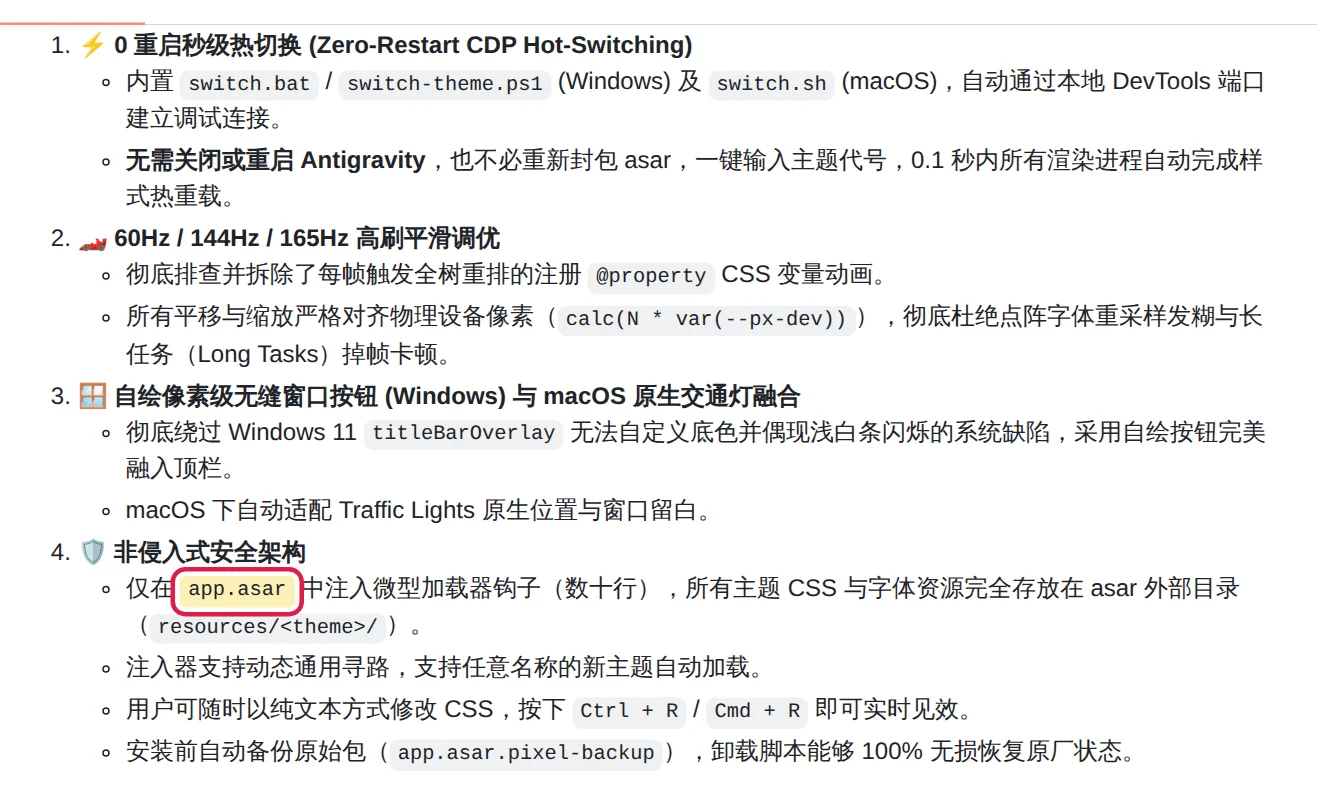
When the underlying DOM and theme system shift every few days, patching Electron's internal app.asar archive becomes fragile. Competing theme pack AreSet01/antigravity-theme, which ships five visual styles including pixel and matcha presets alongside 0.1-second CDP hot-switching, keeps stylesheets and fonts in external folders yet still injects a small loader hook into app.asar and stores an app.asar.pixel-backup file for restoration—meaning each client update risks breaking the hook until re-patched.
chuanban-antigravity-theme-patch takes a different path: it leaves app.asar and system signatures untouched, attaching instead through Chrome DevTools Protocol on local 127.0.0.1 to inject CSS, font rules, and DOM translations at runtime. Its commit history moved from v5.0.0 to v5.2.0 between November 4 and November 14, chasing upstream changes across plugin://swarm-- cross-origin subframes, data-markdown-root, and curtainView background syncing. Since Antigravity 2.31.x writes a dynamic DevToolsActivePort file, the daemon attaches without restarting the app, falling back to ports 9222 or 9223 in argv.json only on older builds.
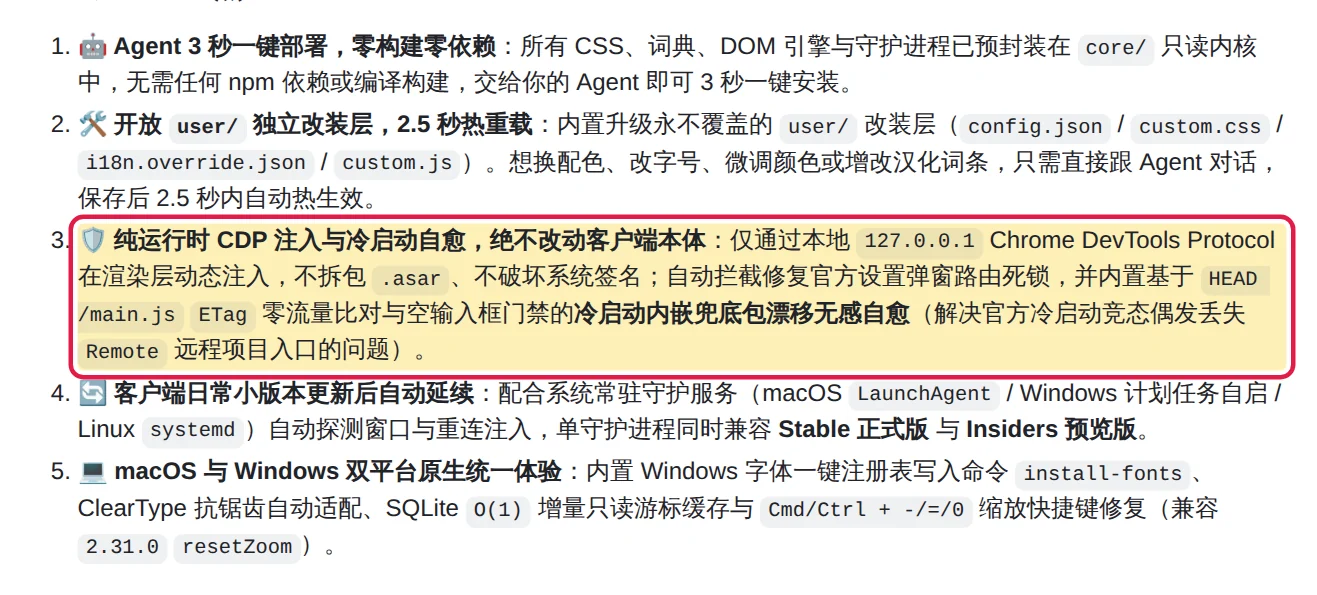
Comparing the two approaches highlights a clear engineering trade-off. An app.asar hook needs only Node 18+ and leaves no persistent background daemon running, loading changes on a simple window refresh. Pure CDP injection preserves binary integrity and survives minor client updates automatically, but requires an always-on background service (LaunchAgent on macOS, scheduled tasks on Windows, or systemd on Linux) plus Node.js 22.13.0 for its node:sqlite telemetry pill. In effect, the maintainer accepted background-daemon complexity so end users do not have to re-patch after every release.
From human READMEs to SKILL.md agent contracts
Distribution has shifted alongside the runtime mechanism. Alongside a user-facing README, the repository maintains a SKILL.md specification written directly for AI coding agents, complete with copyable prompts for Antigravity, Claude Code, Codex, or Cursor to run doctor, install, and verify.
The directory layout enforces boundaries for that agent workflow: a SHA-256-verified read-only core/ kernel is replaced atomically on upgrades, while a user/ customization layer hot-reloads every 2.5 seconds without being overwritten. SKILL.md explicitly forbids visiting agents from rewriting daemon code in core/, restricting edits to user/ config, CSS, JS hooks, and translation overrides, while documenting --safe-mode troubleshooting and Windows font registry commands. What used to be an interactive installer script is turning into a constrained tool contract for agents.
What remains defensible after Google ships Everforest and CJK fixes
The overlap between upstream and community work is equally telling. One original motivation for the patch was Antigravity's bright default light theme and single sans-serif font, yet 2.31.0 added 12, 14, and 16 pixel font controls, and 2.32.0 introduced native Everforest Light and Everforest Dark themes alongside a fix for regular-weight CJK bold rendering.
As first-party clients adopt warmer palettes and cleaner typography, pure skinning mods lose urgency. What keeps community patches relevant—and harder for an upstream team to match immediately—is deep domain localization and local telemetry. In v5.2.0 alone, the maintainer added 34 new UI strings for 2.32.0, replaced awkward literal translations such as Local Checkout with natural phrasing, and stripped 23 redundant English parenthetical suffixes while surfacing token speed and cache hit rates from local SQLite stores directly in the composer. At the same time, hosting the required font pack on an external Google Drive folder (with fallback instructions for Homebrew or be5invis/Sarasa-Gothic) while enabling local debug ports and startup daemons keeps adoption in individual-developer territory rather than audited team environments.
For developers and engineering managers weighing third-party client mods, the decisive check is no longer how many color presets a pack offers, but whether it opens local debug ports, keeps background services resident, and sources large binary assets cleanly.
Sources & references
Copy the link to save or share this article.