Evaluations of AI coding agents fixate on whichever wrapper sits at the top of a table, even when pricing dispersion underneath tells a sharper story. This week FrontierHarness Eval posted a “FrontierHarness v1.1 is live” banner on its site, around the same time Z.ai updated its open-source ZCode workspace to v3.18.2 on 2026-11-12.
Separating live announcements from auditable text evidence, however, splits the picture in two. Static snapshots saved from frontierharness.org contain only the live notice and navigation frame without v1.1 pass rates, model lists, or sponsor details. For inspectable numbers, methodology rules, and task definitions, the verifiable public record remains the v1.0 dataset archived inside the frontier-harness-eval/eval GitHub repository.
What v1.0 proved when model, tasks, and cold starts stayed fixed
The v1.0 benchmark held every variable outside the harness strictly constant. All 360 evaluations ran Kimi K3 (served by Fireworks) over 30 software-engineering tasks—21 drawn from Terminal-Bench and 9 from DeepSWE—using Runta agent runtimes. Every trial launched from a frozen Golden Checkpoint with identical vCPU, memory, disk size, disk contents, and memory state; provisioning scripts warmed only on terminal-bench-sample so formal tasks never benefited from warm-cache bias.
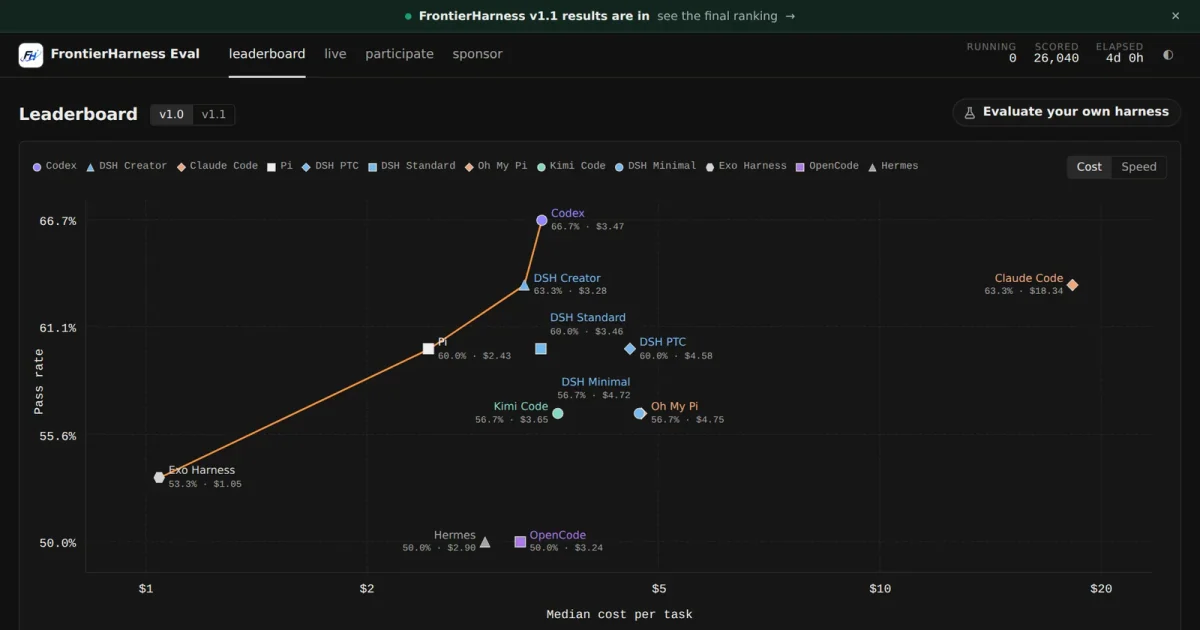
With the model and sandbox locked, pass rates across the 12 tested configurations clustered between 50.0% and 66.7%, whereas median spend diverged by 17.5x. Codex (0.148.0) led on pass rate at 66.7% with a $3.47 median cost, an 88.0% median cache rate, and a 6m 43s median runtime. By contrast, Claude Code (2.1.237) hit 63.3% at a steep $18.34 median cost (67.8% cache rate, 9m 38s), sitting 17.5x higher than Exo Harness (0.1.0) at $1.05 (53.3% pass rate). Meanwhile, Pi (0.84.2) delivered 60.0% at $2.43—already undercutting Codex on cost in v1.0.
Even within a single harness codebase, configuration choices shifted results noticeably. DeepSeek Harness (DSH, 0.1.0-rc.8) appeared in four configurations spanning from DSH Creator at 63.3% and $3.28 (84.3% cache, 6m 44s) down to DSH Minimal at 56.7% and $4.72 (84.6% cache, 5m 41s). That spread underscores how prompt layout, cache retention, and tool-loop design inside the same wrapper alter both success rate and spend.
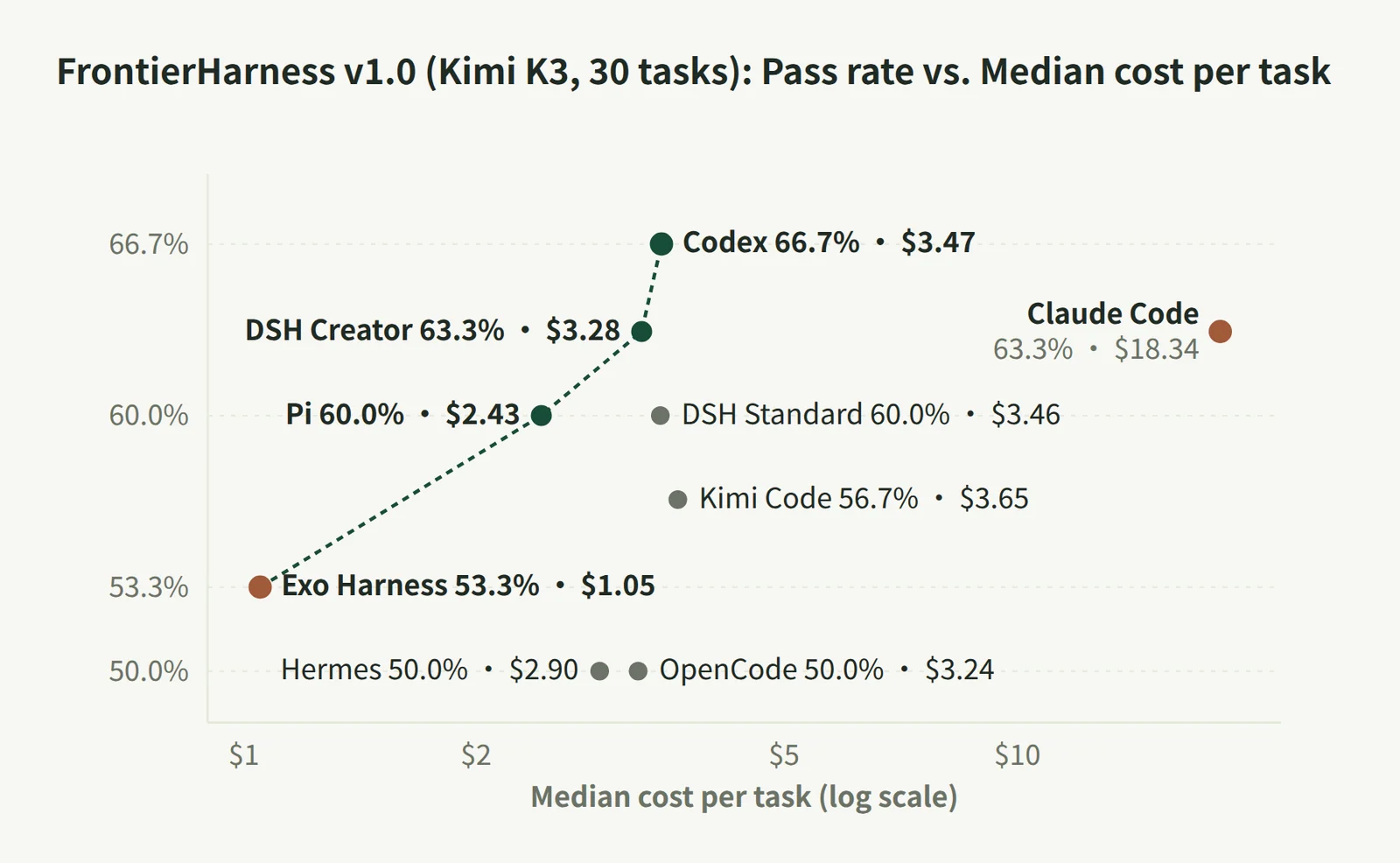
One accounting detail requires care when interpreting those dollar figures. The GitHub README table labels the cost column “Median cost per pass,” while the official v1.0 scatter chart on frontierharness.org labels the exact same numbers “Median cost per task,” and the repository separately defines effective_cost_per_pass as total cost across all tasks divided by passes. It also notes that *_normalized fields reprice first-turn cache reads using non-public data. Benchmark medians therefore establish relative harness variance under controlled tasks rather than a flat per-fix quote on private codebases.
Why Z.ai ships ZCode v3.18.2 alongside GLM Coding Plan
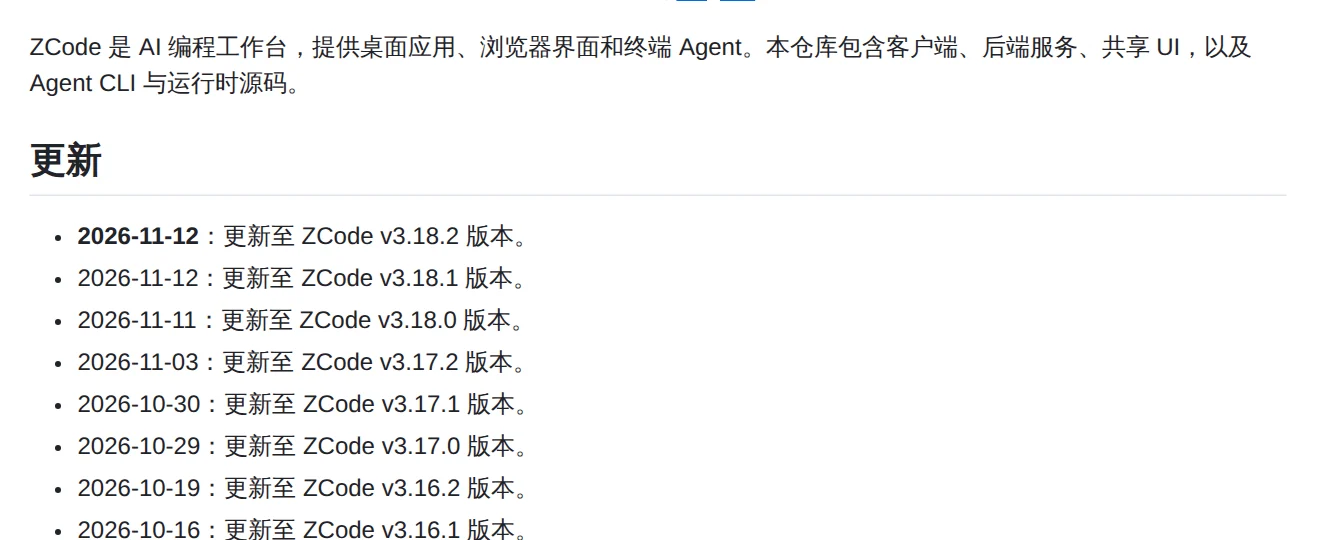
Against that evidence that outer loops drive real token economics, Z.ai has been pushing rapid iterations on ZCode. Beyond a simple CLI wrapper, the Apache-2.0 monorepo (8.7k stars, 2.7k forks) packages desktop Electron apps, a web client, an HTTP/WebSocket server, shared React UI, RPC/provider layers, and the agent runtime under apps/zcode-cli/—shipping v3.18.0 on 2026-11-11 followed by both v3.18.1 and v3.18.2 on 2026-11-12.
On the ZCode product site, the commercial pairing is transparent. Z.ai labels ZCode the “Official Harness for GLM-5.3,” integrates GLM-5.3-Flash for multimodal screenshot understanding, adds remote Goal steering via WeChat, Feishu, and Telegram, and places GLM Coding Plan subscriptions directly beside the downloads: Lite at $12.6 per month ($18 list, 10,000 Credits per week), Pro at $56 per month ($80 list, 6x Lite usage), and Max at $117.6 per month ($168 list, 14x Lite usage).
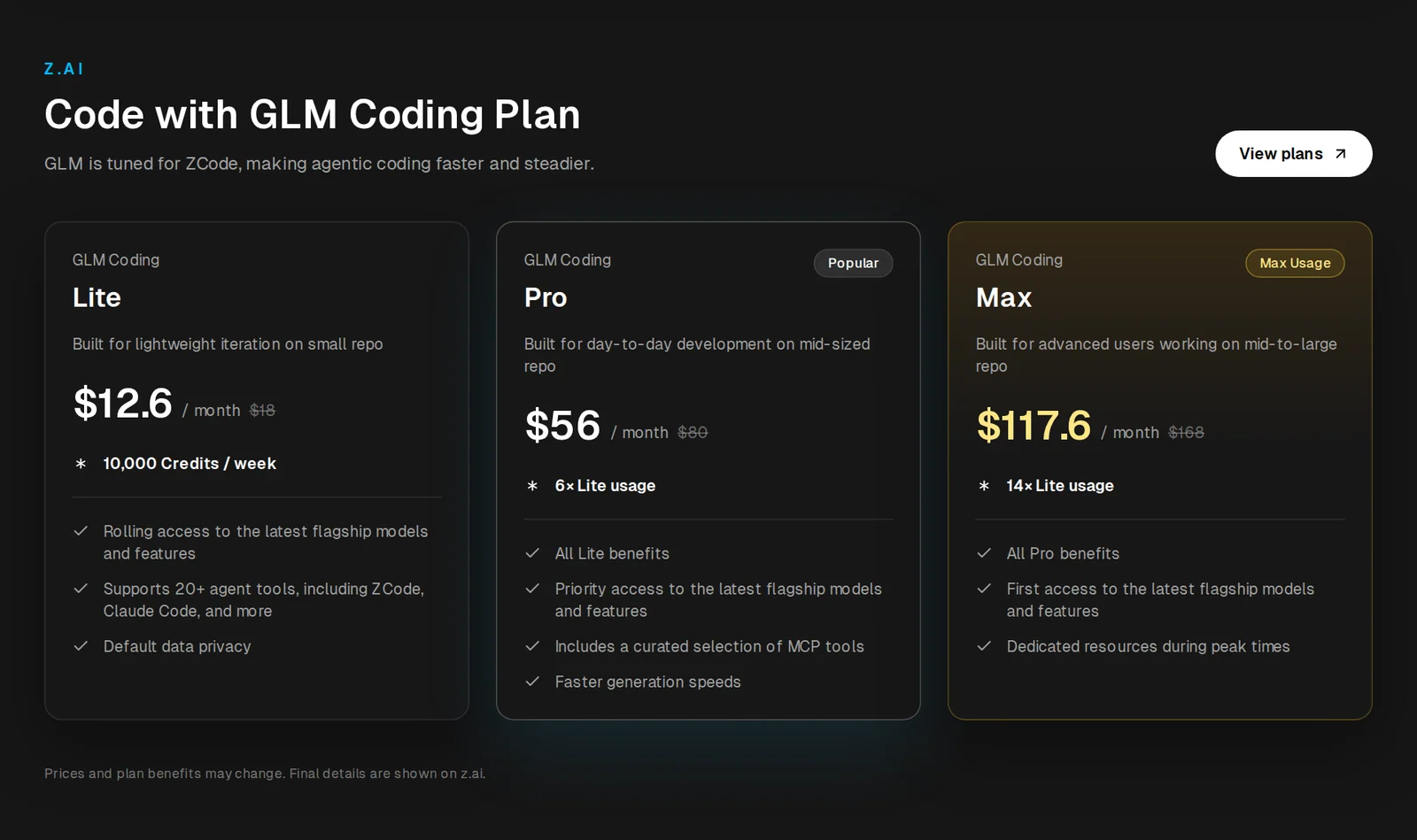
Notice one telling detail in the plan copy: GLM Coding Plan explicitly advertises support for 20+ agent tools, naming both ZCode and Claude Code. In other words, Z.ai's observable strategy pairs a permissive Apache-2.0 workspace—removing upfront client friction across desktop, browser, and terminal environments—with recurring monthly coding subscriptions designed to capture heavy agent token consumption regardless of which CLI an engineer prefers. Whether ZCode itself outperforms Codex or Pi outside GLM-5.3 cannot be verified from the saved snapshots and v1.0 archive currently available.
Two verification gates before trusting any new leaderboard
As benchmarks iterate from single-model baselines to broader sweeps, engineering teams should check two concrete gates before treating headline claims as settled fact.
First is inspectable static archiving. Although frontierharness.org displays a v1.1 live banner, the saved static snapshots contain no v1.1 pass rates, model rosters, or sponsor allocations, while the GitHub repository's benchmark.json, results/eval-data.json, and metadata/harness-versions.json still reflect only the 360 Kimi K3 trials from v1.0.
Second is strict methodological comparability. The repository states that new third-party runs default to methodology_comparable: false and receive no leaderboard rank because the published v1.0 baselines did not log their exact network allowlists. Any outside comparison must pin an identical egress_policy (recording mode, scope, and allowed hosts), freeze clean Golden Checkpoints, exclude infrastructure failures as infra_invalid, and run a matched control harness side by side. Until raw v1.1 task logs and pinned harness versions appear in repository JSON, cross-model rankings remain something to verify on a controlled sample of your own tasks rather than accept on headline order.
Sources & references
Copy the link to save or share this article.