JetBrains Junie
CodingJunie combines a coding agent with planning, model choice and JetBrains development workflows. Use the CLI, supported IDE integration or repository automation to work on scoped code changes.
Turn prompts and visual references into editable interfaces and full-stack apps with Vercel’s AI builder.
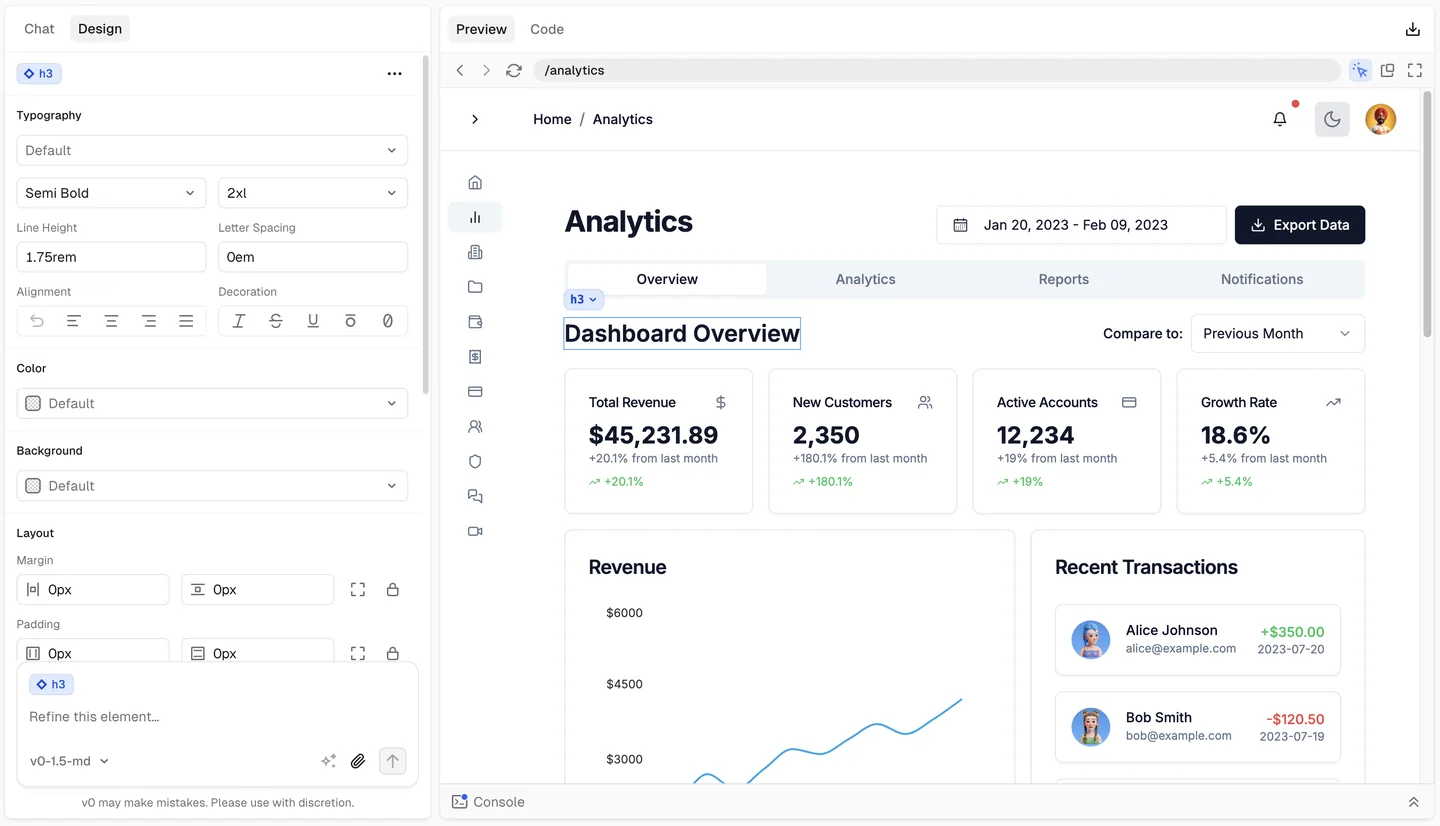
v0 is Vercel’s AI builder for interfaces and full-stack applications. Start with a written description, a screenshot or existing project context, then refine the result in a running preview. It is particularly relevant when a team wants a usable React or Next.js interface that can continue through ordinary source control and deployment. Our preferred entry point is a single, well-specified page with one working interaction: a search result, a dashboard filter or a signup form. Establish the information hierarchy and responsive behavior first. Once those are clear, connect the data and define what should happen when a request fails.
Editorial landing pages
Searchable directories
Client dashboards
Existing-app components
Official product image. Click to inspect the details.

Use the direct controls for small adjustments and a clear request for structural changes. Design Mode guide · API documentation.
Prepare content, actions and design constraints
Generate one page with real interaction states
Connect data and inspect credentials
Review the preview and publish
Example prompt: “Build a calm editorial AI-tool directory in Next.js. Use cream backgrounds, charcoal text and peach accents. Show six realistic tools, category filters and a mobile bottom action bar. Keep search state in the URL and include a no-results state. Use local sample data first.”
Hosting and database services can cost extra.
Checked October 3, 2026: the live pricing page lists Free, Plus, Business and Enterprise. Free has a seven-message daily limit. Plus is displayed at US$30 per user/month and Business at US$100 per user/month; paid allowances and extra credits apply. Listed prices exclude applicable taxes. Live pricing.
Model usage is measured through input and output tokens, including relevant context. Your deployed application and connected database can have separate hosting or provider costs.
No. It can generate application code with backend and data integrations. You still need to inspect whether a particular generated flow actually persists and retrieves data correctly.
Yes. The official FAQ lists GitHub, Vercel project and ZIP imports. For an existing product, begin with one isolated change so the team can review its effects.
No. Describe the task in your preferred language, but keep component names, field definitions and desired behavior explicit.
The current Design Mode guide says it is unavailable on mobile viewports and read-only chats. Use desktop for that editing workflow; this is separate from making the generated site responsive.
A screenshot shows appearance, not business rules. Explain filters, permissions, validation and success or error states in the accompanying request.
You can edit and export code or connect GitHub. Portability still requires configuring the target runtime, dependencies and external services.
The official FAQ says Vercel does not own code generated from your prompts. Output may overlap other material, so evaluate dependency licenses, assets and suitability before commercial use.
Explore platforms, inputs and outputs, licensing, and access requirements.
These are suggested starting tasks. Their value comes from clearer requirements and shorter feedback cycles, not a promise that every generated application is production-ready.
A Vercel account can access v0. The product is available in the browser and through an iOS app; an internet connection is required. The standard publishing flow targets Vercel, with production visibility and domains managed during release. Preview URLs help review changes without replacing the production address. Deployment guide.
Developers can use the v0 API to create and continue building conversations and embed authenticated previews. This is a product integration path, not a reason to put API keys in browser code. Keep credentials on a trusted server, monitor usage and decide how users can authorize deployment actions.
Adding a database through project integrations can create an account with that provider and configure environment variables. SQL actions may create, alter or remove tables, so use a suitable development dataset first. Keep production migration decisions explicit. Database integrations.
For a real launch, our recommendation is to document ownership of the Vercel project, repository and database together. Include a recovery route and a contact for failures. An attractive interface is the start of the product; stable permissions, data maintenance and predictable costs determine whether it remains useful.
The live plan page states that Business opts out of training by default and Enterprise data is not used for training. Review the actual workspace’s data preferences before supplying private material. Service access is not an open-source license for v0 itself. Plan privacy differences.
For generated Next.js apps, variables prefixed NEXT_PUBLIC_ are intended for the browser. Put privileged tokens in server-side configuration and check what the app exposes. The provider’s security controls do not replace reviewing your own authorization logic. Security documentation.
Checked October 3, 2026.
Loading experiences…
Saved tools are private. Approved comments are public; edits return to moderation. Comment counts include approved comments and replies. Each person has one rating. New ratings are automatically approved; withdrawn, unapproved or invalid ratings do not count. Share real experiences and avoid spam, private information or personal attacks.
For moderation appeals or data requests: support@findgoodai.com
Bring a real task and see how it fits the way you work.
User experiences