A practical first workflow
- Select a representative origin. Choose a paper that closely matches the question. Verify its metadata and avoid spending a free graph on a vague title match.
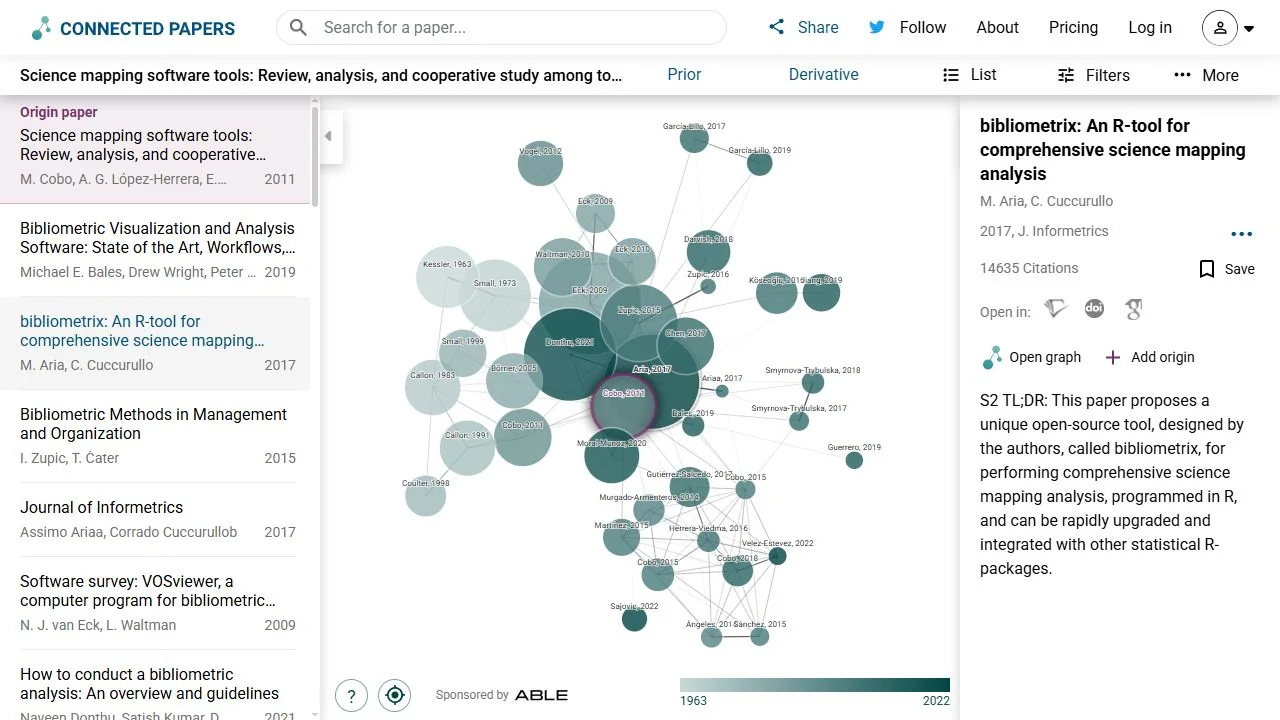
- Read the graph as similarity. Look for groups and inspect several papers in each. Remember that visual proximity is a discovery signal rather than evidence of direct citation or agreement.
- Inspect prior and later work. Use both views to widen the reading list. Follow original paper links and check publication details before deciding what belongs in the project.
- Save a reasoned shortlist. Record why each candidate is useful and what remains unread. Keep the graph as a navigation aid alongside a conventional bibliography and research notes.
Example prompt or task: Starting from this verified seed paper, identify a small set of related methods and later discussions. For each candidate, read its abstract and record why it may answer the research question before adding it to the bibliography.
This is an editorial literature-discovery workflow. A graph is not a complete systematic search, quality ranking or automatic validation of a paper’s conclusions.

User experiences